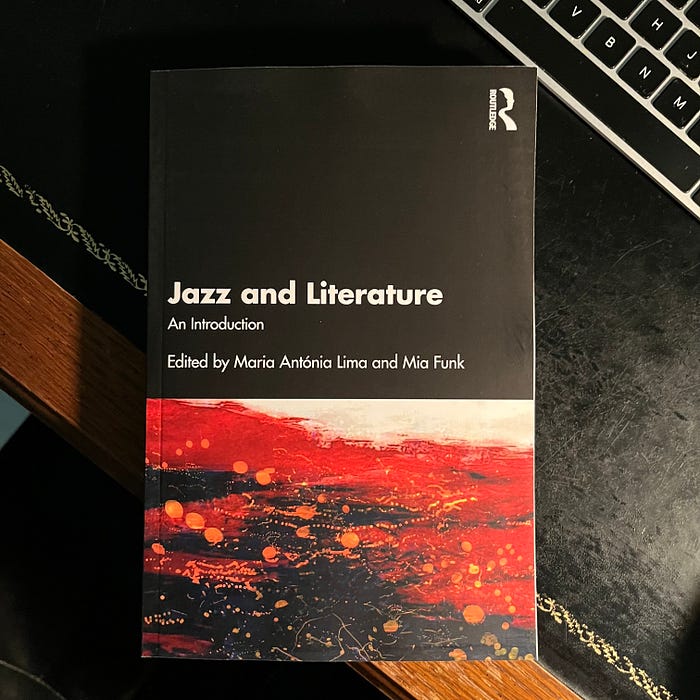
I’m very pleased to have received in the mail yesterday my copy of Jazz and Literature: An Introduction edited by Maria Antonia Lima and Mia Funk. I connected to this project through Antonia and was fortunate enough to recruit Allen Michie and William Levine for it, who both contributed great chapters.
My chapter explores the connections among jazz, the songs “Tis a Pity She’s a Whore” and “Sue” on the album Blackstar, and John Ford’s 1633 play ’Tis Pity She’s a Whore. Bowie’s earliest musical interests were in jazz and his first instrument the saxophone; jazz appears on his albums beginning in the early ’70s and periodically resurfaces starting in the 1980s, 1990s, and culminating in the album Blackstar, which may be the most musically innovative album of Bowie’s career. Jazz, in this chapter, was Bowie’s language for the insanity and horrors of war, race riots, and dysfunctional romantic love, each of which weave in and out of each other in the narrative created by these two songs.
The anthology itself is innovative in its own way, combining academic essays such as mine followed by four subsections on different aspects of the creative process, the last three sections including interviews with artists in a variety of media about jazz and the creative process, poems, and artworks.
 James Rovira
Leave a comment